
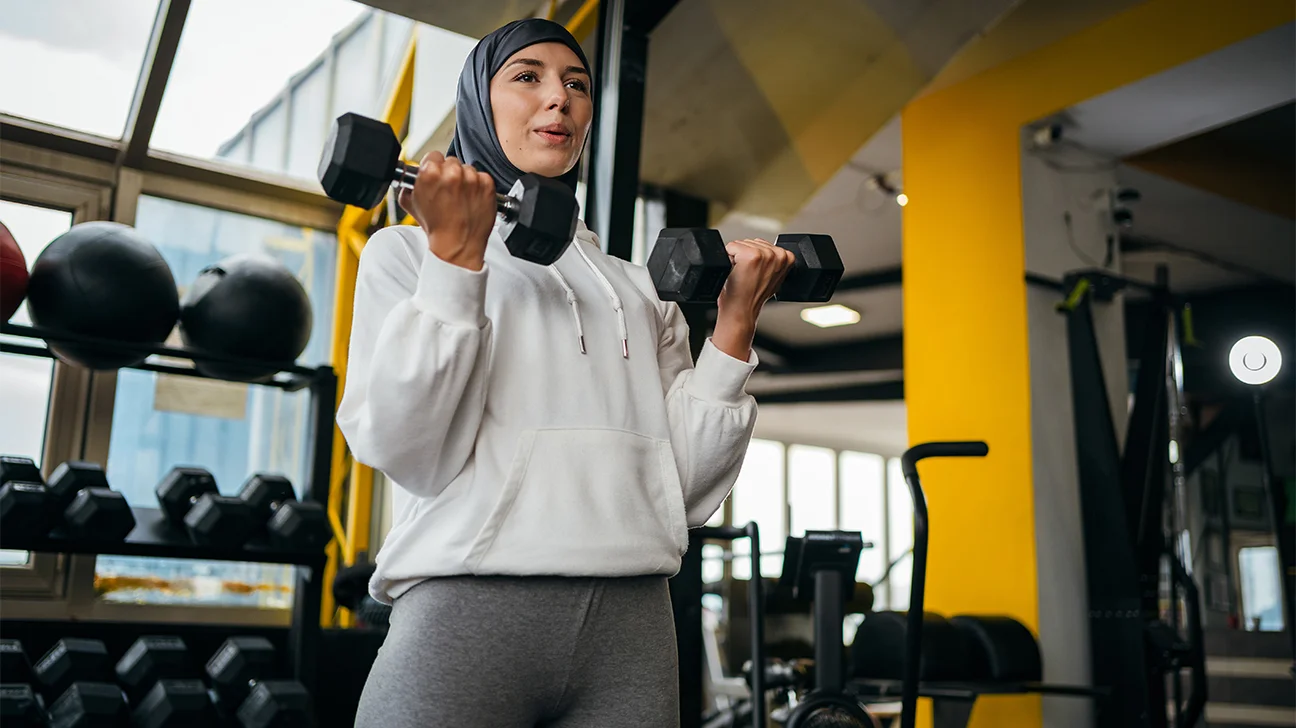

Group training often combines dumbbells, bands, carries and floor exercises in one session. Participants may assume that the largest muscle group determines when an exercise becomes difficult. In practice, grip or trunk fatigue can limit the movement first, changing technique before the target muscles receive the planned work.
In well-coached workout classes, instructors account for these supporting demands when selecting exercise order, resistance and transitions. Members also need to recognise when the hands or trunk are no longer controlling the task. Reducing load at that point protects class quality rather than weakening the workout.
Grip Connects the Member to the Equipment
Rows, deadlifts, carries and presses require the hands to maintain secure contact. As grip fatigues, members may hold equipment awkwardly or shorten the movement.
The target muscles may still feel capable, but the implement becomes less stable.
Grip endurance therefore affects how much useful work can be completed. It should be considered during load selection, not noticed only when the weight starts slipping.
Core Fatigue Changes Force Transfer
The trunk helps organise force between the upper and lower body. When trunk control declines, members may arch, rotate or shift to complete repetitions.
These changes are not always dramatic. A person may gradually shorten a press or use momentum during a row.
The instructor should identify one or two visible standards that show whether the exercise remains controlled.
Exercise Order Can Create Hidden Limitations
A long plank followed by overhead pressing may reduce trunk control during the press. Heavy carries before rows may exhaust the grip.
Neither sequence is automatically wrong. It needs to match the class goal.
If the main objective is pulling strength, grip should not be exhausted by unrelated work first. If the goal is whole-body endurance, the overlap may be intentional but still requires scaling.
Timed Classes Can Encourage Excessive Load
Members may choose a weight based on what they can lift once, not what they can hold for an entire interval.
A timed set creates accumulated grip and trunk fatigue. The correct resistance should allow secure handling until the planned finish.
Starting lighter during the first session gives the member information. Load can increase later when technique and transition speed are known.
Grip Fatigue Has Observable Signs
The member should reduce or stop when:
- the implement begins to slip;
- the wrist position changes repeatedly;
- fingers cannot close securely;
- weights strike the body or floor;
- the movement range shortens because of the grip;
- equipment cannot be returned safely.
Chalk or straps may not be appropriate or permitted in a group format. They should not substitute for sensible loading.
Core Fatigue Is Not the Same as Abdominal Burning
A burning sensation during abdominal work does not automatically mean the trunk can no longer stabilise other exercises.
Conversely, trunk control may decline without strong local burning. Breathing, posture and movement strategy provide additional information.
The instructor should avoid reducing core training to how intensely the abdominal muscles feel.
Breathing and Bracing Need Context
Members may hold their breath during difficult repetitions. Brief bracing can be appropriate in some strength movements, but continuous breath-holding through a long class interval may create unnecessary strain.
The instructor can cue breathing that fits the load and movement. Lighter repeated work often permits a regular breathing rhythm.
Members with cardiovascular or blood-pressure concerns should obtain appropriate guidance rather than copying advanced lifting techniques.
Carries Combine Grip and Trunk Demand
Loaded carries are a clear example of supporting systems working together. The hands secure the load while the trunk resists unwanted movement.
Distance, weight and carry position change the challenge. A one-sided carry creates different trunk demand from holding two equal weights.
The class needs enough space for safe turning and a clear place to set equipment down.
Floor Work Can Pre-Fatigue the Hands
Planks, mountain climbers and push-ups load the hands and wrists. Moving directly from these exercises to dumbbells may affect grip comfort.
Wrist-sensitive members may use an incline, handles or another suitable option.
The instructor should distinguish local hand discomfort from general effort. Persistent pain, numbness or weakness deserves appropriate assessment.
Sweat Changes Equipment Security
Singapore’s humidity and high-intensity classes can make handles slippery. Members should have a towel positioned outside the movement path.
Equipment should be wiped when necessary, and resistance reduced if secure grip cannot be maintained.
Gloves may help some participants but are not a complete solution. Fit and equipment compatibility matter.
Transitions Need a Safe Release Strategy
Fatigued members may drop dumbbells or place them where others will step. The class briefing should explain how to end the set.
Weights should be returned under control before moving to the next station.
Recovery time must include safe equipment placement. An interval ending does not require an immediate uncontrolled release.
Scaling Can Preserve the Main Exercise
If grip is limiting a lower-body movement, a machine or different load position may allow the legs to continue working.
If trunk fatigue affects an overhead exercise, a supported or lower-resistance version may preserve the pressing goal.
Scaling should target the actual limiting factor. Replacing every difficult movement with unrelated cardio removes the programme’s structure.
Repeated Classes Build Specific Endurance
Members may notice that the hands and trunk fatigue less after several weeks. Part of this change comes from better setup and pacing.
Progress can include holding the same load more securely, maintaining posture longer or needing fewer corrections.
Increasing resistance should follow these improvements rather than precede them.
Total Weekly Grip Work Matters
Strength training, climbing, racquet sports and manual work can all contribute to grip fatigue. A class does not occur in isolation.
Members who arrive after a heavy pulling session may need lighter class weights.
Persistent hand weakness, tingling or symptoms affecting daily tasks should not be treated as ordinary class fatigue.
Instructors Should Programme Around Bottlenecks
Repeating grip-heavy stations without recovery can make every later exercise depend on the same tired tissues.
Class design can alternate loaded and unloaded movements or change equipment position.
This does not eliminate fatigue. It distributes it so the session continues to reflect its intended whole-body goal.
Progress Should Include Equipment Control
Completing more repetitions has little value if weights become unstable. Secure pickup, movement and return are part of performance.
When joining classes at True Fitness Singapore, members can ask how to select resistance for longer tracks and which modifications reduce grip or trunk demand while preserving the movement.
Grip and core fatigue change workout quality because they influence every contact with equipment and every transfer of force. Recognising these limits early helps members maintain control and obtain the intended training effect.
Frequently Asked Questions
Why do my hands fail before my back during rows?
The grip may have less endurance than the pulling muscles or may already be fatigued. Reduce the load and review exercise order and handle setup.
Should I use lifting straps in a group workout?
Only if the class and facility permit them and you know how to use them. Straps can complicate transitions and should not justify excessive loads.
Does shaking during a plank mean my core has failed?
Not necessarily. Shaking can occur with effort, but position, breathing and control determine whether the set should continue.
How can I stop dumbbells slipping when I sweat?
Dry your hands and handles safely, use a manageable load and consider suitable gloves if allowed. Stop if the equipment cannot be held securely.
Can grip fatigue affect exercises that target the legs?
Yes. Dumbbell squats, lunges and carries may end because the hands cannot hold the load even when the legs remain capable.
Comments are closed.